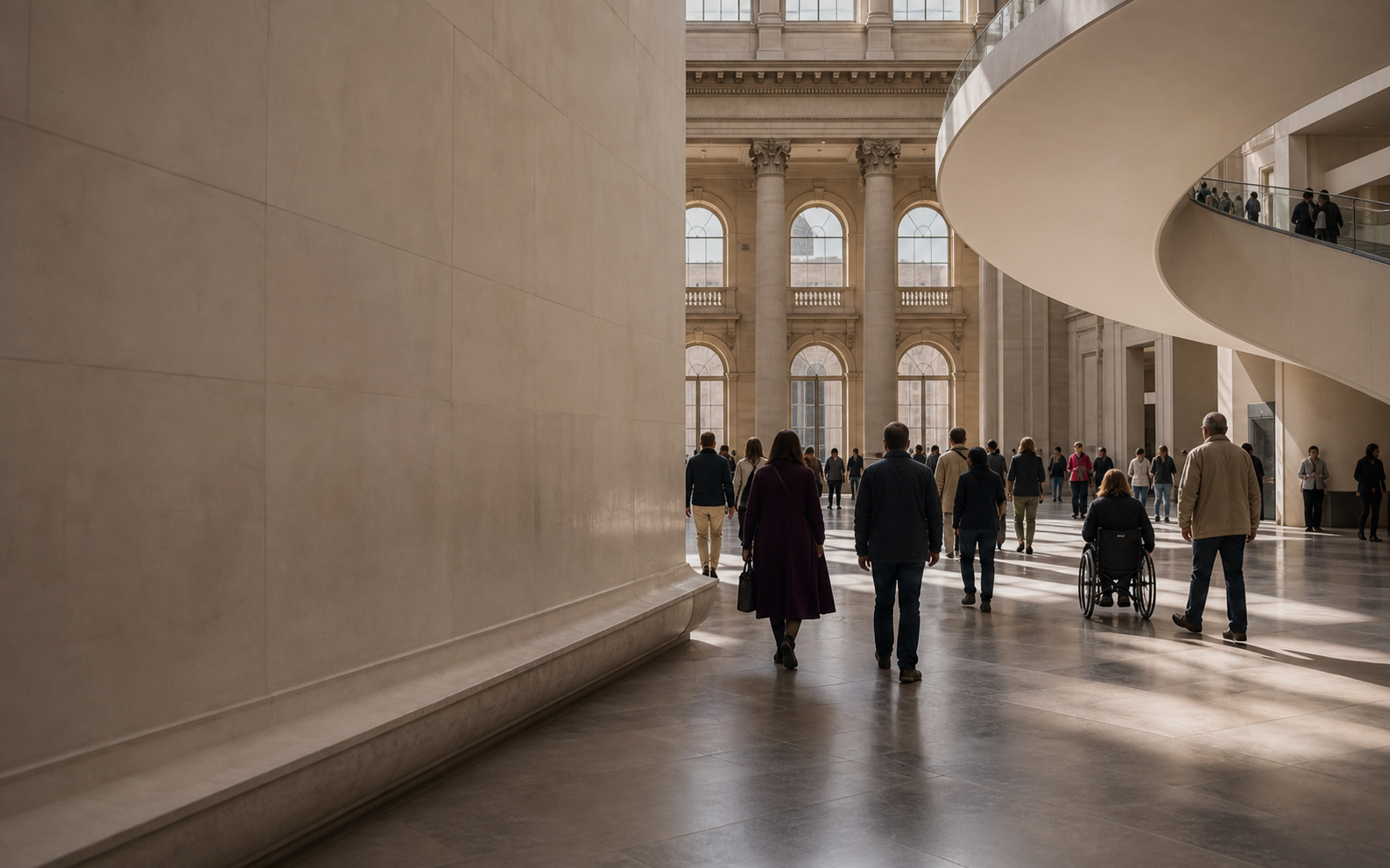
Most conversations about accessibility begin with a sensible question: can someone get in?
Of course that matters. The problem is how often the conversation stops there.
A person may enter a venue and still have to sit away from the people they came with. They may register for a conference but find that the stage has steps, the networking happens around standing tables and the seating plan gives them one assigned spot. An accessible hotel room can still come with a breakfast room, terrace or front entrance they cannot use alone.
They were allowed in, but the rest of the experience kept them at the edge.
Then what?
Once somebody can enter, I want to know what happens next. Can they choose where to sit? Move around without waiting for help? Join a conversation without being parked at its edge? Change their mind halfway through the day?
Those details tell us whether someone is present on paper or participating in real life.
They also change the work. Accessibility can no longer sit in a checklist at the edge of a project. It has to shape the experience itself.
A ramp can get you through a door. It does not necessarily allow you to participate.
Participation lives in the details
Most exclusion is less dramatic than people expect. It often comes from an ordinary decision made with too narrow a picture of the people who will be there.
A fixed-height reception desk seems small until every conversation happens above your head. A stage with two steps may look harmless until a speaker has to be lifted onto it. A ticket form that does not work with assistive technology can exclude someone before they have even left home.
No single detail tells the whole story. Together they decide who gets to move freely and who spends the day asking for exceptions.
Stop treating people as a surprise
Individual support will always matter. People have different needs, and no design will remove every request. But support cannot carry the full weight of inclusion.
If every disabled participant has to explain the same barrier, wait for a key or depend on somebody improvising, the design has already told them they were not expected.
I am less interested in making that help more efficient than in removing the avoidable reason it was needed.
Getting through the door should be the start of the experience, not its main achievement.