This is a working note, not a finished report. It sets out what I want to examine when I document a real event.
Event organisers often ask the venue whether it is accessible. A “yes” can end the conversation far too early.
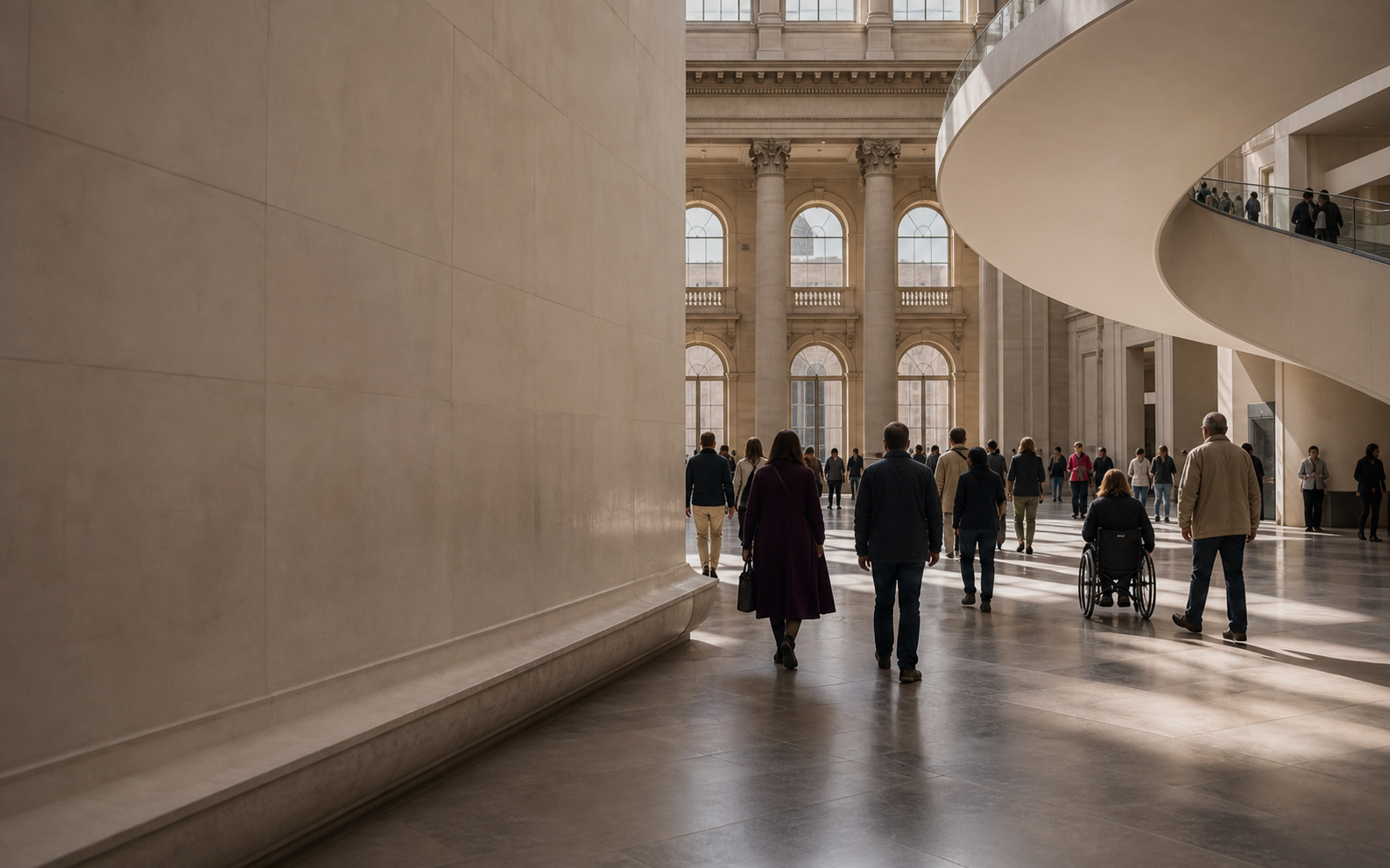
A participant experiences the ticketing process, the travel information, the queue at the entrance and everything that happens once the doors open. They may need to reach a viewing area or a stage, find somewhere to sit during a break or work out whether the emergency plan includes them.
A participant can still spend the day waiting for somebody to solve problems the building survey never covered.
What I want to find out
Where do live events still create dependence or separation after describing themselves as accessible? I also want to look at who owns the answer when a participant shares an access need before the event.
Follow the participant's day from the invitation to the journey home. Every access request needs a person responsible for the answer.