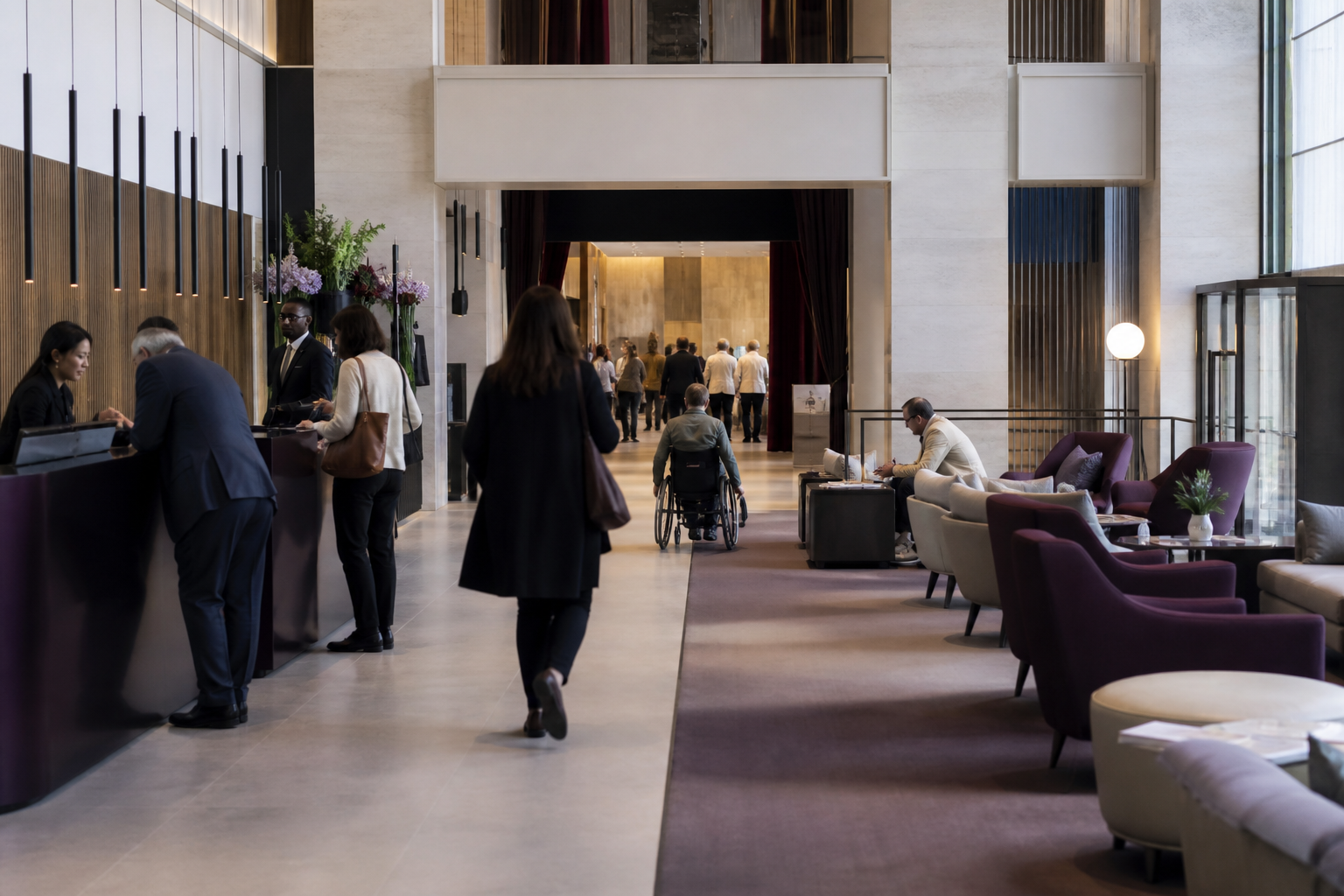
This is a working note, not a review of a particular hotel. I will only turn it into a full Field Note when I have a documented stay to examine.
Hotels tend to describe accessibility through measurements. Door width, turning space and bathroom fittings all matter. They still do not tell you what the stay will be like.
Can the guest choose a room category? Will the breakfast room be reachable? Does the route to the pool end at a flight of steps? Can somebody at reception answer a specific question before the booking is paid for?
What I want to find out
I want to look at the difference between a room that meets the measurements and a hotel that lets a wheelchair user have an ordinary stay, with reliable information and room to change their mind.
Check the whole stay. The measurements in the bathroom do not tell a guest whether they can use the rest of the hotel.